Winter roof problems in Glen Burnie usually don’t start with anything dramatic. There’s no loud crack or obvious failure. Most of the time, nothing looks wrong at all.
It’s cold nights stacking up. Wind is pushing in from the Bay. Snow that melts a little during the day and locks back up after dark. That cycle repeats for weeks, sometimes months, and roofs take the hit quietly.
Water finds small openings. Not big gaps. Tiny ones. It slips in, freezes, expands, and then does it again the next night. Most homeowners don’t notice until something inside the house feels off. A stain that wasn’t there before. Insulation that feels damp. A faint smell that doesn’t go away.
By that point, the problem usually isn’t new. It’s just finally showing itself. That’s when most homeowners start looking into roofing services to figure out what’s actually going on.
Winter roof maintenance isn’t about fixing damage after the fact. It’s about catching things early, before winter has time to make them worse.
Why Winter Is Especially Hard on Roofs in Glen Burnie, MD?
Maryland winters are rough on roofs, mostly because they never stay consistent. One day it warms up. The next night, everything freezes solid. Snow melts, water moves, and then it gets trapped when temperatures drop again.
That water doesn’t drain the way it should. Each freeze-thaw cycle pushes it deeper into the roof system. You won’t see it from the yard. From the ground, everything usually looks fine.
Ice dams are another common issue around Glen Burnie. Heat escaping from the house melts snow higher up the roof. That water refreezes near the edges, where it’s colder. Once ice builds up there, it acts like a wall. Any new melting snow has nowhere to go except back under the shingles.
Older roofs struggle the most. Many homes in the area still have shingles that are 15 or 20 years old. Over time, shingles dry out. They lose flexibility. Cold weather makes them brittle. Wind does more damage than people realize.
7 Essential Winter Roof Maintenance Tips
Winter roof maintenance is about preparation and paying attention before problems spread. Most winter damage starts in the same few places and usually long before snow piles up.
Trying to inspect a roof yourself during winter can be dangerous. Ice hides weak spots. Slopes are slicker than they look. Knowing what to watch for helps you decide when it’s time to call in a professional.
Here are some practical tips to keep your roof looking and functioning its best this winter:
1. Schedule a Professional Inspection
A roof inspection before winter gives you a clear starting point. It shows what’s holding up and what’s already starting to fail. Professionals know where winter damage usually begins and what early warning signs look like.
Fixing small issues early keeps them from getting sealed in by ice and snow. Inspectors often check for things like:
- Shingles that have shifted or lifted
- Cracked flashing or worn sealant
- Soft spots or early moisture issues
- Drainage problems around gutters
2. Clean and Secure Gutters
Gutters don’t get much attention until they stop working. When leaves or debris block them, melting snow backs up and freezes. That extra weight pulls on the gutter system and makes ice dams more likely.
Frozen gutters can also force water back under the roof edge. Before winter sets in, it helps to:
- Clear out leaves and debris
- Tighten loose brackets
- Make sure downspouts carry water away from the home
3. Keep an Eye on Shingles
Shingles don’t have to be missing to cause leaks. A cracked edge or lifted corner is enough. Wind can break shingle seals without making it obvious from the ground.
Occasional visual checks can help catch issues early. Look for:
- Uneven shingle lines
- Pieces of shingles near the house
- Curling or splitting edges
4. Pay Attention to Flashing Areas
Flashing protects the most vulnerable parts of the roof, like chimneys and vents. Anywhere something passes through the surface. During winter, metal expands and contracts, which can break seals or open gaps.
When flashing fails, water usually gets inside quickly. Signs to watch include:
- Lifted metal edges
- Cracked or dried sealant
- Gaps after strong winds
5. Don’t Ignore the Attic
A lot of winter roof problems actually start inside the attic. Warm air escaping from the home melts snow unevenly. That leads to refreezing at colder edges and ice dam formation.
Good insulation keeps heat where it belongs. Proper ventilation helps keep roof temperatures more even. It’s worth checking that:
- Air leaks are sealed
- Vents stay clear
- Insulation coverage is consistent
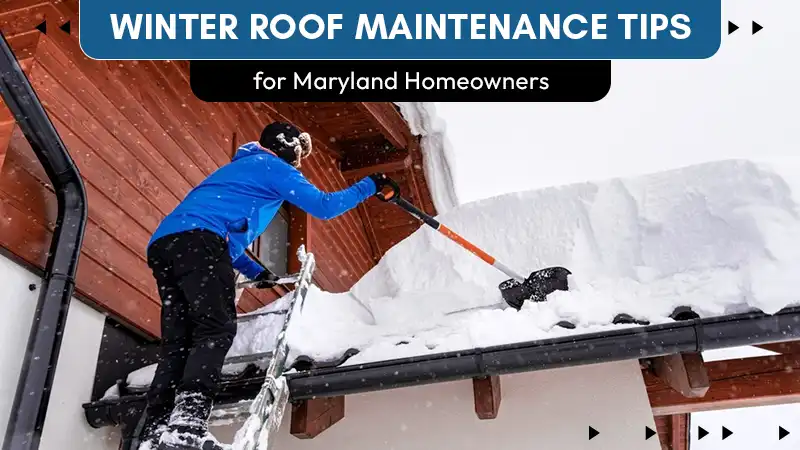
6. Be Careful with Snow Removal
Snow adds weight and keeps moisture on the roof longer. Removing some of it can help, but winter roofs are dangerous. Ice and hidden damage make walking on shingles risky.
In many cases, clearing snow near the edges is enough. If you do remove snow:
- Use roof rakes from the ground
- Avoid icy surfaces
- Never chip ice with sharp tools
7. Watch for Interior Warning Signs
Not all winter leaks drip. Some show up slowly. A faint stain. A musty smell. Insulation that feels damp.
These early signs matter. Once temperatures fluctuate, small leaks can get worse fast. Common warning signs include:
- Discoloration on ceilings or walls
- Wet attic insulation
- Peeling paint near ceilings
- Persistent damp odors
Also read: Best Roofing Materials for Homes in Maryland in 2026
What Happens When Winter Roof Maintenance Is Ignored?
Small roof problems don’t stay small. Water that slips under shingles spreads. It soaks insulation. It weakens the roof deck. Over time, fasteners loosen, and materials start to rot.
Repairs become more involved. More expensive. More disruptive than they needed to be.
Moisture also affects the inside of the home. Drywall can soften. Paint bubbles. Mold becomes a concern. Insurance claims can be harder to navigate when damage is tied to long-term neglect instead of a single storm.
That’s often when water damage restoration, storm repair, and insurance claim assistance become necessary.
When to Call a Roofing Contractor in Glen Burnie?
Winter roof issues don’t resolve on their own. Acting early can help prevent costly damage and unnecessary stress. It’s a good idea to schedule a roof inspection in the following situations:
- After heavy snowfall: The weight of snow and melting ice can expose weak spots.
- After strong winds: Wind can loosen or lift shingles without visible damage.
- When ice forms along roof edges: Ice dams can force water beneath shingles.
- If your attic insulation feels damp: Moisture may indicate poor ventilation or a hidden leak.
- If your roof is 15-20 years old: Older roofs are more susceptible to winter-related wear and tear.
House Transformers Inc. proudly serves Glen Burnie and the surrounding areas throughout Maryland and the DMV region.
Why Glen Burnie Homeowners Trust House Transformers?
Winter damage doesn’t wait, and homeowners know that delays make things worse. We understand local weather patterns, older roofing systems, and how quickly winter problems can spread.
Our approach is straightforward. Honest inspections. Clear explanations. Repairs that last beyond winter.
When you work with us, you get:
- FREE roof inspections with no obligation.
- Insurance claim support when the paperwork gets confusing.
- 24/7 emergency services when damage can’t wait.
- Financing options for unexpected repairs.
- Complete interior and exterior restoration handled by one team.
Call (410) 508-8110 to schedule your FREE winter roof inspection and stay ahead of winter damage.