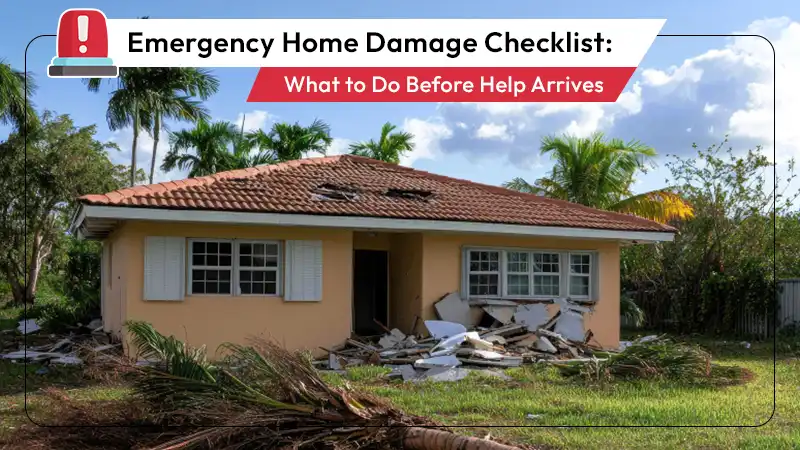
Most home emergencies don’t start loudly. They start as leaks that keep spreading. A burning smell that doesn’t fade. Storm damage you don’t fully see yet. In moments like that, people often freeze or rush. However, quick, steady action makes a real difference in how bad the damage can be.
This checklist exists to slow things down just enough to protect your home until emergency restoration services can take over. The goal isn’t perfection. It’s limiting loss and setting up proper property damage restoration from the start.
Key Highlights
- Early action limits hidden damage.
- Safety decisions come before cleanup.
- Delays often multiply repair costs.
- Photos matter more than people expect.
- Moisture spreads quietly.
- Fire damage lingers after flames.
- Professional help prevents secondary problems.
Types of Home Emergencies This Checklist Covers
Home emergencies can come in a wide variety of shapes and sizes. This checklist focuses on the most common home emergencies and how they tend to behave once damage begins.
Storm Damage
Wind and rain don’t need much time to harm. A loose shingle or cracked window lets water inside quickly. Once moisture gets in, it spreads far beyond the visible area. That’s why quick storm damage restoration is key to preventing bigger issues down the line.
Fire Damage
Even small fires leave a mark. Smoke travels through walls and vents, and soot settles into surfaces, continuing to cause damage long after the flames are out. That’s why timely fire damage restoration is so important. It helps clean, repair, and restore your space before the damage gets worse.
Water and Flood Damage
Water doesn’t stay where it lands. It moves under floors, behind cabinets, and into framing. What looks minor can grow fast if it isn’t controlled early. That’s where proper water damage restoration really makes a difference.
Emergency Cleanup
Broken materials, debris, and contaminated surfaces create hazards. Rushing cleanup without a plan often spreads damage instead of reducing it.
Post-Damage Renovations
Some emergencies expose deeper issues. Repairs can lead to updates once everything is dry, stable, and safe again.
The First 10 Minutes: Safety Comes First
Those first minutes are uncomfortable. There’s noise, uncertainty, and usually a sense that something’s already gone wrong. That’s okay. The focus should be on preventing escalation while keeping everyone safe. These early steps matter more than they seem to.
- Shut off power and water: If utilities are feeding the problem, stop them, but only if it’s safe to do so.
- Evacuate unsafe areas: Smoke, sagging ceilings, or standing water near outlets are reasons to step back.
- Avoid collapse zones: Fire and water weaken structures faster than expected. Distance is protection.
- Protect family and pets: People and animals come first. Always.
If the situation feels beyond control, call House Transformers Inc immediately.
Emergency Home Damage Checklist (Before Help Arrives)
Once the immediate risk is reduced, the next phase is containment. These steps are about stopping the damage and preventing it from spreading further.
- Stop the source: Leaks, exposure, or active damage should be limited, however possible, even temporarily.
- Protect furniture and belongings: Move items out of affected zones when safe. Elevation helps more than people realize.
- Remove standing water or debris: Small amounts can be addressed carefully, but don’t tear into materials yet.
- Document damage for insurance: Photos now are easier than explanations later. Capture everything.
- Improve airflow: Fresh air slows moisture damage when conditions allow.
- Call an emergency restoration company: Professional drying and cleanup prevent long-term problems that DIY work often misses.
This is the point where House Transformers Inc can step in and take the pressure off. Call us at (410) 508-8110 and let us help.
What NOT to Do During an Emergency?
Stress can lead to rushed decisions and often results in bigger problems later. By taking the time to cover all your bases, you can stay safe and avoid further damage and safety concerns.
Here’s what NOT to do:
- Don’t enter areas that feel unstable.
- Don’t mix electricity and water.
- Don’t delay professional help.
- Don’t discard damaged items too quickly.
- Don’t assume what you see is all there is.
Mistakes here often show up weeks later, not right away.
How Fast Damage Spreads (Why Acting Quickly Matters)?
Damage doesn’t wait for permission. It keeps moving, even when everything looks quiet. If left unchecked, it can quickly grow into catastrophic results. Below, we’ve put together how some of this damage can spread if left untreated.
Water Damage Timeline
- 1 hour: Moisture spreads into the flooring and trim.
- 24 hours: Materials swell; odors begin to form.
- 48 hours: Structural breakdown becomes harder to reverse.
Fire Damage Effects
- Soot bonds to surfaces.
- Smoke odor embeds into fabrics and framing.
Storm Damage
- Open or exposed areas allow moisture and deterioration to worsen daily.
Also read: The Complete Homeowner’s Guide to Flood and Water Damage Restoration
When to Contact a Local Emergency Restoration Team?
Some situations shouldn’t be handled alone. If you notice any of the following, it’s probably time to call a professional team to tackle the response:
- Water reaching walls or ceilings.
- Lingering smoke or soot odor.
- Storm exposure that can’t be sealed.
- Cleanup that feels unsafe.
- Any concern about hidden damage.
Calling early usually limits total repairs.
How Professionals Handle Emergency Restoration?
Restoration happens in careful steps. This is how our team of emergency restoration professionals tackles each project:
- Initial Safety Check: The first step is making sure the space is safe to enter. Power risks, unstable materials, and air quality are evaluated before any work begins.
- Damage Assessment: Visible damage is documented, but hidden areas are checked, too. Moisture readings, smoke spread, and structural concerns are identified early.
- Containment Setup: Damaged areas are isolated to prevent spread. This may include barriers, controlled airflow, or temporary protection of unaffected spaces.
- Water Removal or Debris Clearing: Standing water, damaged materials, or fire residue are removed carefully. Nothing is torn out without understanding what supports what.
- Drying and Moisture Control: Drying equipment is placed based on readings, not guesswork. Progress is monitored and adjusted as materials respond.
- Cleaning and Stabilization: Surfaces are cleaned to prevent odor, corrosion, or contamination. Materials that can be saved are stabilized at this stage.
- Final Review and Next Steps: Once conditions are controlled, long-term repairs are discussed. At this point, the home is ready for restoration or rebuilding without setbacks.
From Emergency to Recovery, House Transformers Has You Covered
House Transformers Inc handles emergencies with a steady approach. We follow clear steps, put in solid work, and stay transparent from beginning to end. From the first phone call through final repairs, you’ll know what’s happening and why.
If your home needs emergency help, contact our Glen Burnie team today and let us take it from here. Call us at (410) 508-8110 for a FREE consultation.